
-
The Wicked Deep

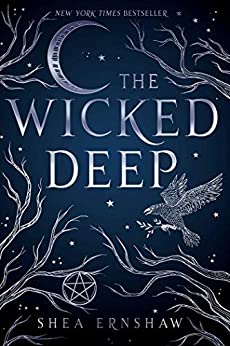
So, funny story-around the same time I purchased Winterwood and The Wicked Deep mostly due to their covers and basic descriptions. There was a big gap between when I read Winterwood and The Wicked Deep and I didn’t realize until just now that they are both by Shea Ernshaw! I must just be really attracted to her aesthetic.
The Wicked Deep is about a small coastal town that lives under a curse-every summer three sisters who were drowned as witches centuries ago come back to take over the bodies of three girls and to kill (at least) three boys. Now, yes, it was hard for me to suspend disbelief that anyone would stay in this town (let alone visit it as a tourist) during this time period. This isn’t a curse everyone has heard but no one believes-this is a real thing that really happens every year. The townspeople have a few tasteless traditions surrounding it and enjoy the bump in tourism it brings the town but doesn’t seem to care that their kids might be murdered. Okay, so, to enjoy this book you have to just get over that part. Accept it and move right along.
The majority of the book follows Penny as she tries to keep the people she cares about safe during “Swan Season” (named for the three Swan sisters who were drowned). The character development was a bit shallow, the description a bit lacking, I found it hard to create clear pictures in my head of what was happening. And the saddest part – the twist was extremely predictable. Now, I am a 37-year-old woman (how did that happen? yikes) who has read a lot and seen a lot of movies, so for me this twist was predictable very early on. But for a 15-year-old? Maybe not predictable at all. For the true YA audience I think this book is probably amazing. I would recommend it to teens if I knew any.
-
Winterwood by Shea Ernshaw
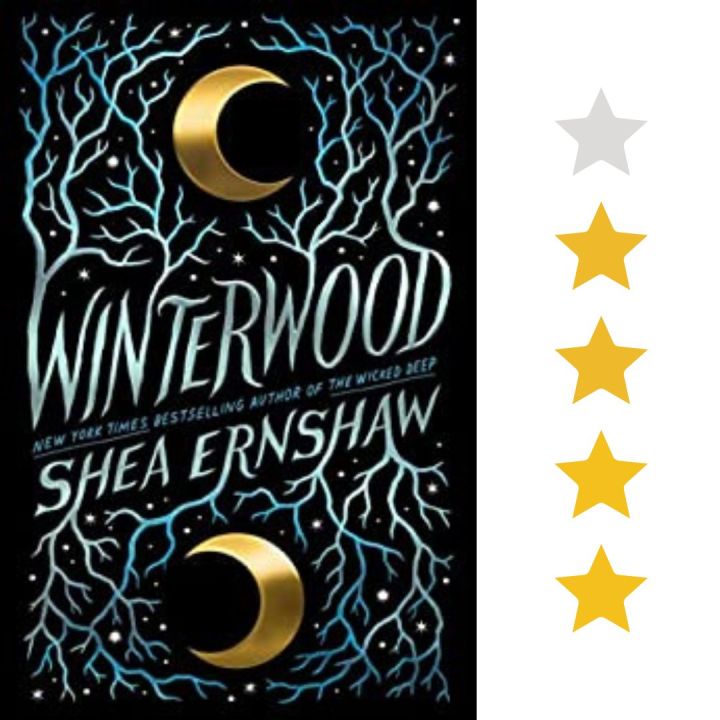

Winterwood by Shea Ernshaw is a mixed bag. There’s a lot of different things happening-our protagonist Nora is a witch with no powers, there’s a forest that is alive and scary but also has some cool trinkets hidden about, a camp across the lake for wayward boys, a massive snowstorm, a missing person, a wolf pet….it goes on.
Nora doesn’t have any friends, so she is suspicious when a popular girl from school, Suzy, shows up at her house begging her to stay with her until the storm passes. She’d been up canoodling with one of the wayward boys when the storm hit and now she’s trapped. Nora reluctantly agrees, even though she already has a house guest: a boy from the camp she found half-dead in the woods.
It felt a bit slow at the start, but it picks up the pace about half way through and that’s when all hell breaks loose. Ernshaw did a great job with this book, at first so many random things felt confusing but by the end it’s all tied together nicely and in a way that I did not find predictable. She got me with this one! It’s difficult to write about this book and avoid spoilers, so I’ll make it short and simple. A lot happens, sometimes it’s a little boring, but it’s all worth it in the end. Read it.
-
House of Hollow by Krystal Sutherland
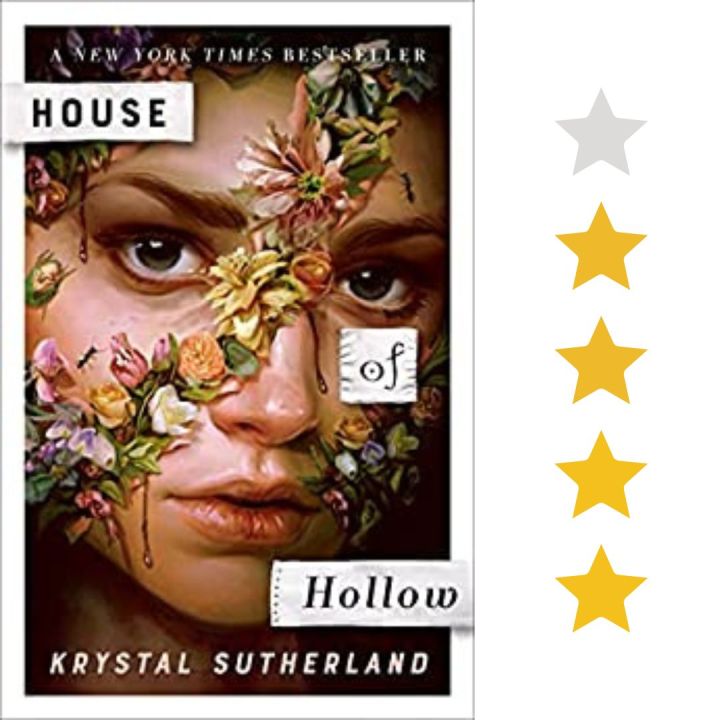
House of Hollow by Krystal Sutherland grabbed my attention with its interesting cover and eerie title and I enjoyed reading it. It was one of those books you think about longingly when it’s in the next room and you’re being forced to do something other than read it – like eat, or work.
House of Hollow is the story of three sisters who disappeared when they were children but were mysteriously returned one month later, seemingly unharmed. They came back different, though, their hair turned white and they had the power to manipulate people into doing anything they wanted.
The setup and the characters felt really refreshing to me, different and interesting. The two older sisters were well-defined and unique, and the pacing was quick enough to keep my attention. There was a lot of beautiful and interesting language-Sutherland is unquestionably a strong writer-but some of that language did become a bit repetitive throughout the book. Everything smells of rot-all the time. The first time Sutherland describes this it’s really interesting and grotesque, but as the book continues so does the rot and it becomes a bit tired.
I would be interested to hear from other readers about how they felt about the ending-part of it was rather predictable (in my opinion) but part of it I didn’t see coming so that helped. There were a lot of things that were never explained or just glossed over – their powers, for example. Why their hair turned white. There was enough left open-ended and unanswered that it felt like there must be a sequel in the works, A few things left unanswered, but nothing big enough to really bother me much. The end felt like it was leaving it open for a sequel, but in an interview I read with the author that, too, is left open-ended, “…if I ever decide to write a sequel…(no promises though).” So I wouldn’t expect a sequel any time soon, if ever. Which does make those unanswered questions a bit more nagging.
This interview, “Krystal Sutherland Reveals 5 Shocking Things that ALMOST Happened in House of Hollow” was really interesting to read, I highly suggest reading it AFTER you read House of Hollow. Loads of spoilers in that interview.
It was hard for me to nail down how I felt about House of Hollow-I loved so many parts of it, but those loose ends are a bit unforgivable if there isn’t going to be a sequel.
-
Small Favors by Erin Craig


I bought Small Favors by Erin Craig because I enjoyed her other book, A House of Salt and Sorrows. I was hoping Small Favors was going to be set in the same world as A House of Salt and Sorrows, but instead it was set in a pioneer-times small town. The story follows 18-year-old Ellerie Downing and her siblings as they fight to survive the winter without their parents. There are monsters, mysterious boys, a no-good brother, and a town full of hateful, vengeful people. I’ll leave it at that to avoid giving spoilers.
My complaints:
- Too much animal death. It started to feel gratuitous.
- The ending felt rushed and failed to address a few plot points, leaving us to just wonder.
- I didn’t believe the love story, Ellerie and Whitaker barely interact with each other, she knows literally nothing about him, not even his real name, but we’re supposed to believe she’s in love with him? This is one of those books that really didn’t need a love interest. It didn’t add anything to the story.
Craig is really good at writing suspense and mystery, but sometimes all that suspense-building doesn’t really go anywhere. Her books will have your heart pounding, that’s almost a certainty, and her twists on fairy tales are always interesting. I just wish I wasn’t left with so many loose ends.
I do look forward to reading A House of Roots and Ruin, the sequel to A House of Salt and Sorrows, I just hope it’s more like House of Salt & Sorrows and less like Small Favors. Skip this one.
-
Vasilisa: Old Rus, Book One by Julie Mathison
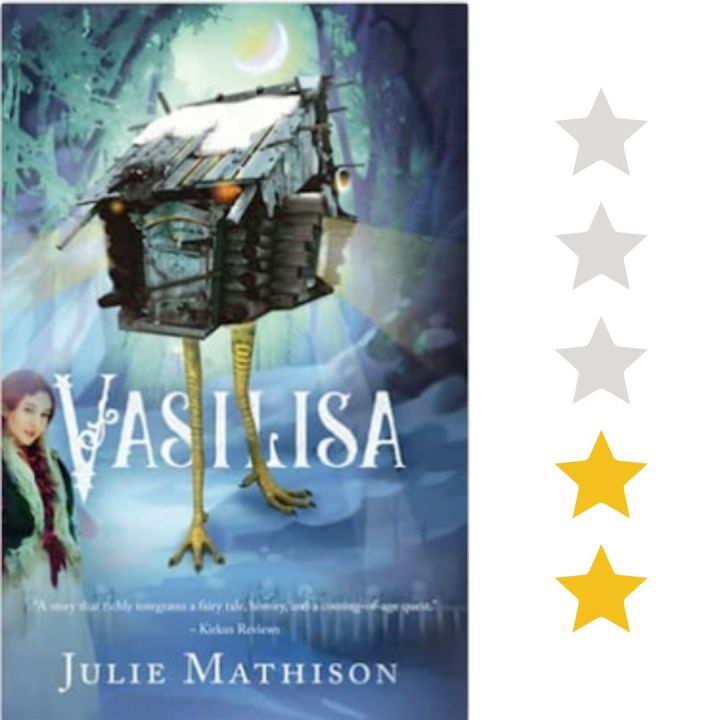

Vasilisa is a young adult novel geared towards the younger set, with the protagonist being a 14-year-old girl. The story takes place in 1919 in the small steel town of Edenfall, Pennsylvania. Vasilisa lives in poverty with her mother and grandmother, her father is MIA while fighting in World War I.
Vasilisa must travel to the mythical world of Old Rus to find a way to destroy an evil troll that has been hunting her family, and potentially find a way to bring her father back from war.
The book features a few Russian folk tales and characters, and the primary tale (Baba Yaga) might be familiar to those who’ve read a lot of fairy tales.
There were some really beautiful lines in this book, but the plot was just okay. I found it difficult to connect with the main character or really care about her. The romance between her and a similarly-aged boy, Ivan, felt weird to me, she just seemed too young for that type of story line and the book really didn’t need it. Why couldn’t her and Ivan just be friends? Too often perfectly good books force a love sub-story that just doesn’t fit.
-
The Bone Orchard
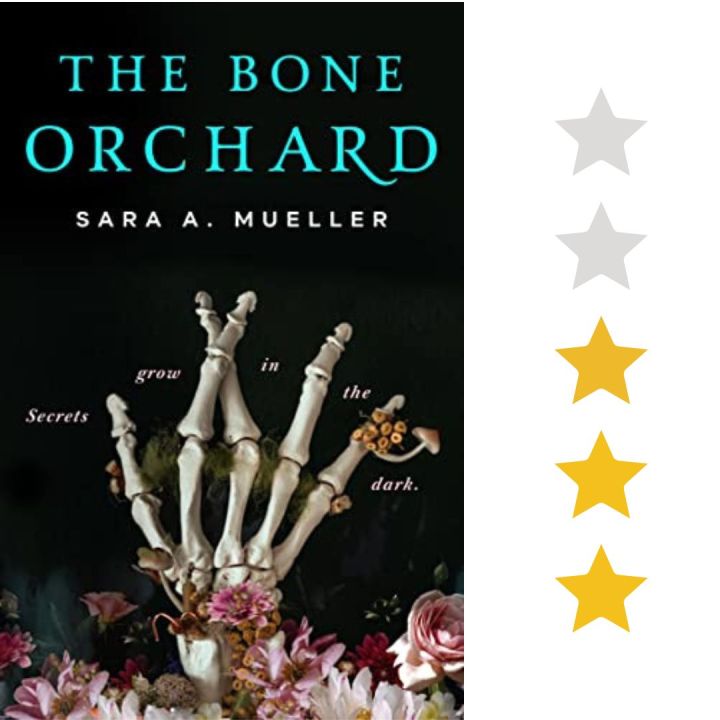

I selected this book to read mostly because of the title. The Bone Orchard starts out with a really interesting premise – a witch that has the ability to grow people and animals using bones. The story follows of a variety of female characters – except that they are all kind of the same character. A witch called Charm has created “boneghosts” to experience things she doesn’t want to experience – aptly named Pain, Shame, Justice, Desire, and Pride. They all physically resemble Charm except each has their own unique deformity. The boneghosts also serve as prostitutes in Charm’s whorehouse.
After the death of the emperor (Charm’s lover) she is tasked with finding and killing whoever murdered him.
There’s also a class war, war between countries, and war between the princes going on.
I loved the portions about Charm and her boneghosts, but the rest of the plot I found a bit tired and dull. War doesn’t interest me, and the second half of the book feels a bit meandering at times. When I finished it I couldn’t help but feel a little disappointed, it had started off so good with such unique characters and concepts with a mix of magic and science fiction. I may have had unreasonably high expectations, I suppose.
I do recommend reading it, if only for the boneghosts.
-
A Wizard’s Guide to Defensive Baking Review
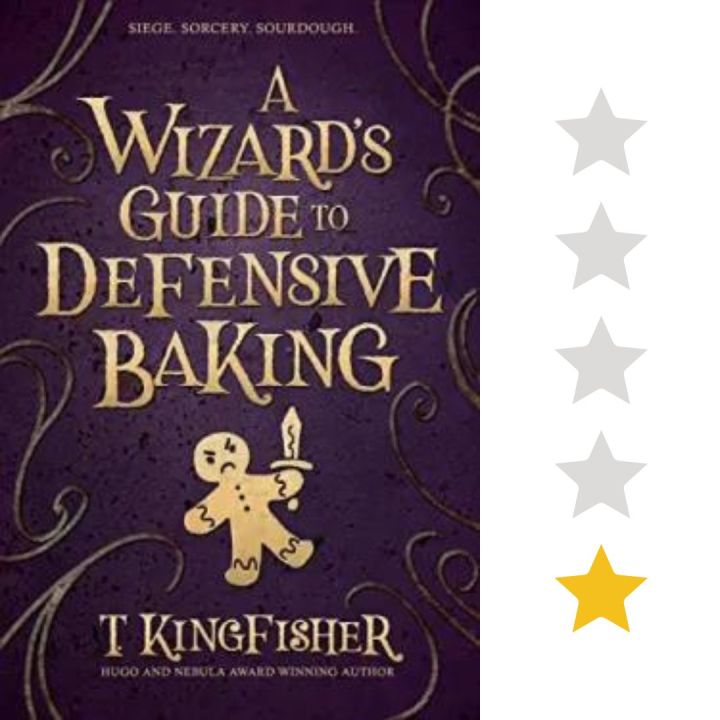

The premise: a 14-year-old girl with baking-specific magic powers is hunted by the corrupt government which seeks to rid the city of all magic. The big bad guy has some ulterior motives for this, some people die, and every adult in power turns to the 14-year-old to solve all their problems.
I bought this book after seeing its cover repeatedly while looking at other books. It’s eye-catching, different from the usual YA covers, and appears to promise humor.
I got 76% through it when I decided I didn’t want to waste any more time reading it. To be honest, I had wanted to quit for awhile before that but had soldiered on, thinking it might improve.
The trouble, I think, was that I had assumed it was a YA book when it’s really a middle-reader book. The writing is very simple, and while there is death and a few creepy characters, it still firmly sits in the “safe for 12 year olds” list, in my mind. That said, I don’t have a 12 year old so parents might disagree.
I hadn’t expected it to be life altering but I had thought it might be funny and a nice break from the usual stuff I read. Eh. It was boring, that’s all I can really say about it. I’m not going to spend a bunch of words dissecting what I didn’t like about it – it was just simply boring.
I just didn’t care how it ended. That’s always a sad realization to come to when reading, but alas, it happens sometimes. I think young kids would (probably?) enjoy this book but if you’re over the age of 14 I suggest skipping it. That said, it has 4.5 star rating on Amazon and over 6,000 reviews, so what do I know?
-
Forbidden: Book One of The Arotas Trilogy by Amy Miles
 Forbidden by Amy Miles
Self-published, available in e-book and paperback format on Amazon. Buy this book here.
Forbidden is a paranormal young adult romance that follows our hundred-something heroine Roseline Dragomir in her journey to escape her blood thirsty and power-hungry husband Vladmir.
It’s a vampire story with a twist: these immortal blood suckers don’t need to drink blood to survive (but it helps with the healing process and makes them more powerful), aren’t afraid of the sun, and can come back from even the most gory assumed deaths. And while they are abnormally attractive, none of them sparkle.
Fed up with living in fear of her (extremely) abusive husband, Roseline flees the country and sets up a new identity as Rose, head-turning teenager at a Chicago high school. There she makes friends with a punky but spunky outcast named Sadie and her sweet brother William.
This is where things get a little…unbelievable. Roseline has been alive for hundreds of years, and although she looks like a teenager one wouldn’t really expect her to act like a teenager or care much about teenage drama. I also had trouble believing that the moment she lands in Chicago the first thing she does is rent a house and enroll in high school. Why would a hundred-something year old vampire on the lam bother with high school? Here is the part where you either toss down your e-reader device of choice in scorn or you employ some suspension of disbelief and soldier on.
I soldiered on. After a few amusing high school escapades our dear Rose meets Gabriel and falls in love. Of course love is never easy in a paranormal YA romance, and so trouble ensues.
Generally I fell in and out of interest with this book. The plot moved quickly enough to keep my attention, the characters were developed enough so that I could picture them and easily keep track of who is who, but often the storyline dipped into “really?” moments that were pretty jolting. Part of this problem is the subject matter. Rose has to go to high school so that she can meet her high school friends and they can become part of the story. Okay. This is a YA book so of course it makes sense that it would be set in an environment familiar to the YA crowd. Alright. Could the author have explained things just a little better so it was easier for the reader to swallow and follow? Definitely.
For those of you who aren’t thrilled with the thought of these high school shenanigans, don’t worry. Things change.
To avoid letting out any spoilers, I’ll stop here with the recap. This book is written with (mostly) a good flow and the writing has the appropriate amount of youthfulness without walking too far down “like, totally” lane. While I typically avoid vampire-themed books (no, I never read the Twilight series but I’ve read my fair share of vamp fiction) this one had enough fresh ideas that it didn’t feel stale. I also enjoyed the transcontinental settings (though they could have been fleshed out a little more, I often felt a little blind when it came to the surroundings).
Come back next week when I review Reckoning, Book Two of The Arotas Trilogy.
-
Bound, Punished, Possessed: The First Three Books of the Arelia LaRue Series by Kira Saito
 I am going to review these three books as one story, since each book is very short and flows into the other seamlessly.
These books follow the story of our young teenage protagonist Arelia as she accepts her powers as a voodoo queen and struggles to fight against dark powers and curses at the stately Darkwood Plantation set just outside New Orleans. There’s love, spirits and magic, and one very annoying blonde best friend.
This book has a very teenage voice, which I suppose is appropriate considering that it’s written from the first person point of view of a teenager. While I tried to adjust to this voice, it often made me feel like I was trapped inside of a car with a gaggle of teenage girls who just won’t stop talking. This feeling can be, as you might guess, rather annoying. Each book reads as if a girl is sitting right next to you telling the story, which leaves little to the imagination and takes away from the plot considerably. I also wasn’t happy to see the immense amount of pop culture references, from Lady Gaga to The Nightmare Before Christmas. Each reference took me out of the story and made me feel disappointed in the author.
 I didn’t care for the two female characters, Arelia the protagonist and Sabrina her vapid blonde friend. Both have their interesting life details, yet they are stuck with one-dimensional personalities with a flair for the annoying. Sabrina is a self-obsessed rich girl with abandonment issues and Arelia is a self-deprecating poor girl with self-esteem issues. If you didn’t pick up on these things naturally through character development, the author helps out by telling you outright.
Not only does she talk outright about her many “issues”, but Saito has Arelia explaining everything to us rather than letting the story play out:
“Whatever you say,” I said reluctantly.
I knew I was more anxious than usual tonight because I wanted to look good. I wanted to be noticed, and I knew by exactly who. Although I felt beyond guilty for wanting what or who I did, I couldn’t help the way I felt. I wanted Lucus, and I wasn’t afraid to admit that anymore.
Okay, so theoretically I was trying to be all confident, but I knew that when I actually saw him, I’d probably say something stupid. – Excerpt from Punished
Saito needs to learn the great art of subtlety—not everything needs to be blatantly told to the readers and she needs to learn that we are smart enough to follow along without her hand-holding. As I read this book one of the first rules of writing rang in my head over and over: Show, Don’t Tell.
That said, I read all three books and genuinely enjoyed them. I even found them somewhat addicting. While Saito’s pace is incredibly fast (Arelia is always in conversation with someone and something dramatic is always happening) it does keep the story moving and kept my attention throughout all three. She’s good at leaving cliff hangers and I was always left wanting more of the story.
Which brings me to what I liked: the story. Saito’s characters may be flat, annoying, and unlikable, but her story is incredible. She dabbles with mythology and magic while setting her story in (obviously fictionalized) history. Much of the story involves Haitian voodoo spirits, which Saito did her homework on instead of making up (I was happy to find) and slavery.
She also has a great way with sensory details, focusing primarily on food, which always captures my attention and praise. After reading these books all I wanted to do was go straight to New Orleans and eat everything Saito mentions in her books.
 The fourth book in this series (Oppressed) is not yet available, but I can tell you that I will read it and probably the rest of the series. I do wish she wrote this series as a trilogy, however, and that she get herself a better editor. I believe these books, given more time and editing, could be something really impressive.
 -
Secrets & Lies by Josh Gross
 Josh Gross’s collection of short fiction (or collection of nonfiction, or fictionalized nonfiction, or some combination of all of the above, depending on how you look at it) span a variety of both funny and distressing topics. A barista tries to treat a homeless man like a human being much to the chagrin of his boss and coworkers, a young couple deals with an abortion, a girl kidnaps a cat, and more than a few people get their hearts stepped on. More than anything, though, these stories are about the often painful experience of growing up.
The collection, aptly titled Secrets & Lies, is composed of stories that feel incredibly honest while others are more like a jolting romp through imagination. It’s difficult to tell where the nuggets of truth are in these stories, but all of them have an intensity of spirit and depth that can’t be denied.
His first story, “The Dog House,” is arguably one of the best stories in the collection. It tells the story of a young couple buying a dog together (a droopy-eared lovable mutt named Elvis) but this, like many of Gross’s stories, is really about the complicated world of relationships. It’s about the feelings of alienation and confusion that come from being left behind, whether you be dog or man. At times funny, at many times heartbreaking, this story pulls at the heartstrings and the funny bone almost equally.
One of the shortest pieces (barely five pages long) titled “Echoes” is incredibly simple and yet undeniably poignant. Written as a dialogue between a couple, it’s a conversation I would bet all writers have had with a lover at some point in their lives. The girl is asking her writer boyfriend why he never writes about her, and the discussion unwinds from there ending in his incredibly stirring one line response (sorry, no spoilers here!).
Probably the most shocking story in the collection, “One Friday in April,” is about a couple dealing with abortion and the painful aftermath of this unhappy event. What makes this story different from other abortion stories you may have read is that it comes from the honest perspective of the man. He isn’t the archetypal jerk who leaves the girl to deal with it herself, nor is he the perfect boyfriend gently smoothing away tears and promising eternal devotion. He is a human being going through an unpleasant and confusing experience with someone who is often closed off and uncommunicative. That’s what Gross does best- he writes stories about real people and how they would really react in these situations.
Summarizing these stories doesn’t do them justice. They are incredibly real and familiar, and while they are fiction, often it feels as if these stories are your own. These are the kinds of soul-molesting stories that are difficult to forget, and would be a shame to miss out on.
 Bent Shelf Book Reviews