
-
Nevada Magazine Sponsors Writing and Photography Contests
This one goes out to all those living in the great state of Nevada:
Nevada Magazine is sponsoring two contests, one for writing and one for photography.
The writers’ contest is looking for submissions of stories about Nevada-specific highlights that are accessible to the public. No limit on amount of submissions.
First prize will receive $500 and will be published in the November/December 2010 issue of Nevada Magazine. The writer will also receive 10 copies of the issue.
Second prize is $200 and published online.
Third prize is $100 and published online.
2010 Great Nevada Picture Hunt
Categories include City Limits, Wide Open, People, Adventure, and Events. You may submit up to 5 photos and the grand prize winner will receive $250 and a Lake Tahoe helicopter tour.
The five category winners will receive $100 each. The winning entries and runners-up for each category will be published in the September/October 2010 issue of Nevada Magazine.
-
Good Reads: a social networking site for book nerds
A few days ago my boyfriend and I were talking about our ideas on cool websites we should start. He mentioned a social networking site centered around books. He said it would be a great idea because most people read for the hipster cred it may give them.
This site would be a way to publicly list all of the books the person has ever read, write reviews, post books they want to read, and look at other peoples’ pages with this same information.
What a great idea, I thought, and promptly went online to find the site we were both certain already existed.
Good Reads is just the site I was looking for. I hadn’t heard of it before searching it out online, so my guess is it hasn’t gained anywhere close to the popularity facebook has. It does, though, offer a few great ways to show the world how much you read.
It offers book lists, quizes, ways to interact with other book geeks, buy books, and other fun little activities. It also provides the option to develop a personal profile complete with your very own “bookshelf”.
So if for some reason your current social networking site isn’t good enough, you can always try out Good Reads.
-
10 Writing Tips from Writers You May or May Not Have Heard Of
Here is a list of ten tips for writing fiction by a bunch of pretty good authors you’ve heard of (list includes Margaret Atwood and Neil Gaiman) and many you probably haven’t.
I know I stole this from someone somewhere, and I would love to give them credit but I have forgotten where I originally saw this link, so that pretty much sucks for them. Sorry.
Here is my selection from the lists of 10 tips that spoke to me:
Elmore Leonard:
Keep your exclamation points under control. You are allowed no more than two or three per 100,000 words of prose. If you have the knack of playing with exclaimers the way Tom Wolfe does, you can throw them in by the handful.
Part of my job at the newspaper is to proof the letters to the editor that the public sends in. I can’t believe how many people overuse exclamation points to show they feel extremely about the issue they are writing about. Of course these are not professional writers and therefore couldn’t possibly know any better (right), but it is incredibly annoying.
Margaret Atwood:
Take a pencil to write with on aeroplanes. Pens leak. But if the pencil breaks, you can’t sharpen it on the plane, because you can’t take knives with you. Therefore: take two pencils.
I can attest to this. I have had many pens burst on airplanes which not only renders them useless, but ruins whatever they may have been riding in.
Geoff Dyer:
Beware of clichés. Not just the clichés that Martin Amis is at war with. There are clichés of response as well as expression. There are clichés of observation and of thought – even of conception. Many novels, even quite a few adequately written ones, are clichés of form which conform to clichés of expectation.
I read a lot. What I hate to read a lot of are cliches. I understand that it’s difficult to describe certain things in a completely new way when so many have described it before you, but please try. I want to hear about cherry lip gloss and shimmering oceans as much as I want to read that a character was dumb as a pile of bricks.
Anne Enright:
Only bad writers think that their work is really good.
I have known quite a few writers in my time. One thing I noticed pretty frequently was how the ones that were certain they were geniuses (regardless of how many rejections they received) were usually not very good writers. Don’t be delusional.
Neil Gaiman:
Finish what you’re writing. Whatever you have to do to finish it, finish it.
At one time I thought myself a fiction writer. During this time I started many short stories and finished maybe two. Therefore in my collection of years of writing I have two stories.
PD James:
Read widely and with discrimination. Bad writing is contagious.
I use to feel like I had to finish every book I started or else I was a quitter. Now I realize that is not so. There are too many great books in this world to waste any time on the crappy ones. If it hasn’t hooked you in the first twenty pages, it’s probably never going to. Put it down and start something better.
Will Self:
Always carry a notebook. And I mean always. The short-term memory only retains information for three minutes; unless it is committed to paper you can lose an idea for ever.
I always carry a notebook with me for many reasons. I get ideas that I will forget if I don’t write them down. I need to write grocery lists. I need to write reminders. Whatever the reason, a notebook is a necessity.
Zadie Smith:
Work on a computer that is disconnected from the internet.
No one gets anything done when connected to the internet. Unless what they are trying to get done is updating their blog.
Sarah Waters:
Writing fiction is not “self- expression” or “therapy”. Novels are for readers, and writing them means the crafty, patient, selfless construction of effects. I think of my novels as being something like fairground rides: my job is to strap the reader into their car at the start of chapter one, then trundle and whizz them through scenes and surprises, on a carefully planned route, and at a finely engineered pace.
Write a good book, please. I don’t care at all about your stupid issues.
Rose Tremain:
Listen to the criticisms and preferences of your trusted “first readers”.
I’ve edited a lot of stories for my friends. A lot of the time they just argue with me, which isn’t very useful to them or to me. You don’t have to follow my advice, but remember that I am a reader and that you are writing for readers, not yourself. Unless you are writing just so you may read it over and over in which case go ahead and ignore the suggestions of your peers. I would like to add to this one: don’t get mad at your first readers if they don’t like what you have written, grow a spine.
-
Review: Push (Precious) by Sapphire

This book was originally published under the title “Push”, but has been re-released under the title “Precious” so as not to be confused.
Grade: B-
I am constantly surprised by how many depressing, horrifying, stories are advertised as “uplifting” and “a human triumph”. This particular one was announced as “hope-filled” and “redemptive”, although it does throw in “horrific” and “brutal” which describes the story in a more honest way.
If I were to write a few word blurb for the cover of this book I think it would look something like this:
“A truly horrifying tale…of a girl who is fucked over by life.”
“Tragic…heartbreaking…proof that life sucks.”
Something along those lines.
“Push” is the novel that the film “Precious” is based upon. I have not seen the film, nor would I have chosen to read this book if it hadn’t been pushed into my hands by my step-mother.
For those of you who haven’t seen the movie, this is a story of a young black teenager living in Harlem. She has been repeatedly raped by her father since she can remember (there is a particularly graphic portion where her mother jokes about Precious’s father taking her Pampers off in order to rape the small child). She is made pregnant twice by her father, both times she keeps the babies.
Because of her parent’s abuse and neglect, Precious can’t read or write and must go to a special school. The novel follows her advancement through the school and how she fights back against her abusive parents.
The book is written in vernacular which takes some getting use to but not much. It’s an extremely tragic story of how Precious’ life is so irreparably damaged by her parents. Other girls’ stories are told as well, most just as horrifying.
This story is not based on any “real” people, although it could be argued that the incest, abuse, and poverty can be seen all across America.
However. I find this book to be filled with all the best examples of shock value. INCEST! RAPE! AIDS! GAY BASHING! Yup. Doesn’t take a rocket scientist to see what attracted Hollywood to this novel.
It was a quick read, one that is difficult to put down due to the above reasons. It’s impossible to look away from a car crash this horrific. This book would be nothing without the horror- and it’s difficult for me to respect it for that reason.
Some good parts- it’s nice to read a book from the point of view of a new type of narrator. It’s not often you hear the story of an overweight, decidedly unattractive (she speaks heavily on this issue throughout the book) woman who has gone through so much trauma and speaks of it so honestly. She is crass and blunt, and it is refreshing.
Again, don’t read this book if you’re looking for warm fuzzy feelings and happy endings- you will be very disappointed.
-
NPR's Three-Minute Fiction Contest
Writing contests are too numerous to name, and very few are the kinds that actually lead to notoriety and a sense of pretentious accomplishment.
One writing contest, NPR’s Three-minute fiction, is one of the latter in my mind. No, you won’t be receiving cash prizes upon winning, nor will you be published anywhere. But you do get to read it on the air, which is pretty cool considering the amount of people who listen to NPR.
Round four of this contest will be judged by bestselling author Ann Patchett, and the deadline for submissions is April 11.
What I like about this writing contest is that they give you guidelines. Guidelines such as, it must be 600 words or less and use the words plant, button, trick, and fly somewhere within the story. Little rules like that make me feel as if I’ve already written a small portion of it and all that needs to be done is complete it.
Patchett explains her chosen four little words on the NPR website:
“They’re dull little words, little everyday words that I want to see in all of the stories,” Patchett tells NPR’s Guy Raz. “People can use them as nouns, as adjectives or as verbs.” You can also use the words in any tense, if used as verbs.
“It’s really nice to have little markers to go by, something to sort of occupy one side of your brain while the other side of your brain is being very creative,” Patchett says. “I think of these four words as the splint that will hold the story together.”
-
Review: Little Bee by Chris Cleave

About the author: Chris Cleave is the author of three novels, Little Bee, The Other Hand, and Incendiary. He also wrote a column for The Guardian for two years. His website includes comments from the author himself, information on his novels, and a place for readers’ comments.
Grade: B-
This novel, formerly published under the title The Other Hand, is a perfect example of false advertising. On the cover the New York Times Book Review clearly announces it as a “affecting story of human triumph” while the back cover tells little of what the actual story is about, and instead attempts to hook potential readers with vague promises of magical storytelling:
“Once you have read it, you’ll want to tell your friends about it. When you do, please don’t tell them what happens. The magic is in how the story unfolds.”
Luckily you have me to tell you what this novel is really about.
This novel is told in a split narrative between a bored English woman and a refugee from Africa. Little Bee, a 16 year old refugee, escapes from Africa on a boat from men who murdered her sister and destroyed her entire village for the sake of oil. Once in England, she is kept in a detention center for two years where she learns English.
The woman, Sarah, is dealing with the suicide of a husband she ceased to love years ago while ruminating on her career, young son, and lover.
What do the two women have in common? Sarah saved Little Bee’s life once in Africa by cutting off her middle finger for some unnamed bad guys. Once Little Bee is mistakenly released from the detention center she finds her way to Sarah’s house (by using her husband’s driver’s license he left on the beach that fateful day).
The novel is a collection of memories and thoughts from both women with very little timely action. Little Bee reconnects with Sarah, and they spend a few nice days together before Little Bee is deported back to Africa.
This story does not have a happy ending, and I would argue is far from a “story of human triumph”.
The writing is decent, though the chapters in which Sarah takes the narrative sound trite and false, when it seems that we are suppose to care about Sarah and probably even respect her. Her character, except for the finger incident, is weak and very naïve, which left me annoyed with her most of the time. Her dialogue also never sounds very natural.
Little Bee’s chapters are what carries the book, largely due to the horrific nature of her experiences and the constant question, will she make it?
The answer, (spoiler alert) is no.
What is so affecting about this story is that it is set in modern times and based in fact. No, there is no Little Bee, but there are many refugees, warfare, and prison-like detention centers all over the world. I suggest reading this book if you’ve already decided on suicide and need just a little push in that direction.
-
Featured Website: 826 Valencia
While reading Dave Eggers’s A Heartbreaking Work of Staggering Genius, I became interested in the magazine, Might Magazine, that he co-founded in the 90’s and is now defunct.
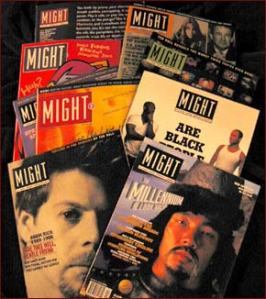
After a quick internet search, I found this website 826 Valencia . It was co-founded by Dave Eggers himself. It sells back issues of Might Magazine and other interesting publications I would love to own such as a collection of writing lesson plans called Don’t Forget to Write.

Also, the site has a distinctive pirate theme I don’t really understand but must be fantastic for pirate lovers. They offer a small array of “pirate supplies” such as Mermaid Bait or Repellant
The shop also offers a guide on proper thumb wrestling techniques and San Fransisco-related texts.
-
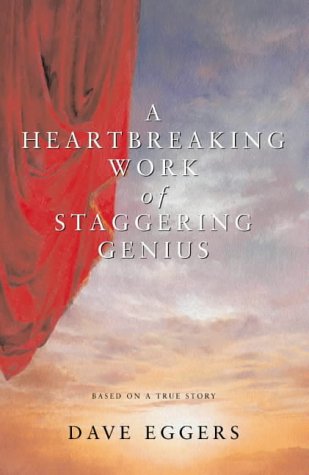
Oldies but Goodies Part 1: A Heartbreaking Work of Staggering Genius by Dave Eggers

About the Author: Dave Eggers is a writer, publisher, and editor. He is the co-founder of the literacy project 826 Valencia and Might Magazine, now defunct. His first book was A Heartbreaking Work of Staggering Genius which was a finalist for the Pulitzer Prize for General Non-Fiction. He has also published multiple other books such as You Shall Know Our Velocity, The Wild Things, and a collection of short stories called How We Are Hungry. He was also a writer for Salon.com and is currently working as a screenwriter. He is also an editor and contributor to multiple other publications. He founded McSweeney’s, an independent publishing house which produces a quarterly journal among other things.
Grade:B
This semi-autobiography covers Eggers’s life, more or less, until his late twenties. He talks about his parents’ early deaths, becoming the guardian of his elementary aged brother, Toph, the dramatic tragedies of his friends, and the production of his magazine, Might Magazine.
This strange autobiography is written in a stream of consciousness-paranoid-rant style which is refreshing at first but becomes tiring frequently throughout the novel. It is interesting when he shows the reader exactly what he was thinking, nonsensical as it may be, and adds a realism to the novel that is seldom seen in other autobiographies. For instance, Eggers’ mind is constantly imagining terrible scenarios in which his younger brother, Toph, is being murdered, whenever he leaves the kid alone or with a babysitter. Its these kind of thoughts that everyone has in their day to days- paranoid concerns we know are ridiculous but can’t help but have anyway.
Unfortunately this type of writing gets old pretty quickly as the reader loses his/her patience and just wants the story to unfold. Eggers also digresses into anecdotes often, which only adds to this problem. He also repeats information and stories.
This novel would have gotten an A from me if it was maybe half its length. With the repetition cut out and the constant stream of consciousness reduced, I wouldn’t have been so frequently skimming past long passages about the hundredth way Eggers has imagined Toph being murdered by his babysitter or the lengthy descriptions of a game of Frisbee.
Eggers also plays with his characters- literally putting his words into their mouths. He writes a long dialogue between himself and Toph in which Toph psychoanalyzes Eggers in a way that is obviously above his age level. Eggers has his character Toph say what he himself is actually feeling about himself and his motives. This is often confusing but also intriguing, as I have never read anything like it before.
He also often breaks the fourth wall by having his characters get mad that their lives are being used for a book, another way in which Eggers portrays his guilt and self-deprecating tendencies.
Criticisms aside, Eggers certainly draws the reader into his erratic head with a very distinct, honest, and often self-deprecating voice. He admits, it seems, to everything. He admits he is excited about using his friend’s suicide attempts as literary fodder, and that he looks at his life as something that must be interesting enough to write about. This tactic makes him seem like the most honest narrator in the history of literature, but also completely full of crap. Which, of course, seems to be his intention. He is both completely egotistical and self-deprecating, an often funny combination.
The most interesting portions of his novel is when he paints his generation (being 20-something in the 90’s)and describes the process of producing Might Magazine.
My advice would be to read about half of this book, and then stop. It’ll have been plenty.
-
Among the Missing, collection by Dan Chaon
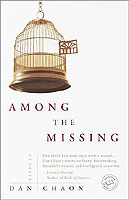
About the author: Dan Chaon is the author of two novels, Await Your Reply and You Remind Me of Me, and two collections of short fiction called Fitting Ends and Among the Missing. He is the Pauline M. Delaney Professor of Creative Writing at Oberlin College in Cleveland, Ohio.
Grade: A ++++!
Among the Missing was my introduction to the fiction of Dan Chaon. And what an introduction! His writing cuts to the soul, his portrayal of the family life is so poignant and easy to relate to. His stories are engaging and heartbreaking, but not in a woe-is-me fashion.
It’s difficult to fully explain Chaon’s beautiful way with words. He doesn’t mess around in cliches or attempts to be grand. He doesn’t shove meaning and messages down your throat, he merely shows people as they are. His characters have a sense of being so real they might be related to you.
This collection of stories has quickly brought Chaon up to my favorite authors list. I look forward to reading the rest of his work.
Chaon’s characters tend to be uncertain, uncertain of themselves, the promises they make, and of the people they love. In “Passengers Remain Calm” a young man’s brother takes off, leaving behind his wife and young son. The young man, Hollis, tries to be there for both of them, mostly the young son. While he tries to keep the son happy, he pauses when he promises never to leave him the way his father did. He realizes that while he loves the kid, he know he can’t make that promise.
In the title story, “Among the Missing”, a college-aged son reflects upon one of his last visits with his mother before her disappearance. It is centered around a family that drowned in the lake by the mother’s cabin, but follows the son’s curiosities about who is mother really is while admitting to the reader that he was distracted by girls and his job at a video store. It’s this sort of combination- the desire to know the mother better but failing due to other, selfish interests that makes his characters so familiar. The result is that we fully understand the son and his reasons for everything. He is not a villainous son who doesn’t care about his mother, rather he is ourselves, every reason why we don’t call our own parents more often.
Chaon writes short fiction the way it should be written- with honesty and a deep knowledge of how we live our lives.
-
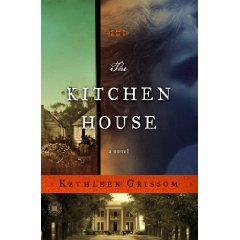
The Kitchen House by Kathleen Grissom

Grade: A
This is chick-lit-historical-fiction at it’s best. Every turn of the page is murder, mayhem, rape, and forbidden love affairs. Everything you need to get the blood bubbling.
The Kitchen House follows two female protagonists, Lavinia, a white indentured servant from Ireland, and Belle, a beautiful half-black half-white slave. The story is written in alternating chapters, with Lavinia’s chapters being considerably longer than Belle’s.
Belle acts as Lavinia’s mother figure when she is first brought to the plantation. Lavinia is happy with her black family, but as she grows older and more beautiful, outside forces tear her from her family and thrust her into the white world she doesn’t understand and doesn’t feel connected to. Many minor characters are killed, sold, raped, and beaten throughout Lavinia’s life, breaking her heart and ours each time.
Belle, on the other hand, is hated by the master’s family because they think she is his mistress. In reality, she is his daughter. We also follow Belle’s sad story through both her and Lavinia’s eyes.
To try and sum up all the details and complexities of the relationships between the many characters would just confuse, so that’s all the summary I will attempt.
I enjoyed this book very much, compelled to stay up late nights flipping through pages with a hunger I haven’t felt in a long time. Grissom writes in a beautiful southern tone throughout the novel, and her use of detail and observations are compelling. However, I am aware that my love of this novel may be mostly because of how much action and violence is laced throughout, and my love of it feels a little cheap.
Though there are many characters in this novel, Grissom writes them in such a distinct way that the reader is always clear on who they are. I’ve often read other novels with an abundance of characters so indistinct from each other that I would get them mixed up. This never happened with The Kitchen House. The characters came alive so fully that it would be impossible to get them mixed up.
However, the majority of these complex and beautiful characters are female, as it goes with chick-lit. It is common for male characters to be flat and unforgivable, but Grissom surprises again with male characters that are as complex, if not more so, than her female characters.
Marshall, an especially complex character, does the most horrible acts to everyone around him. And yet, the reader can’t help but feel sorry for him, knowing his twisted past. We watch Marshall as he turns from innocent child to sadistic monster, and his fall from grace is even more compelling at times than Lavinia’s narrative.
One aspect of character development I was disappointed with was how pure and good Lavinia was. “With the heart of a child” as she is often described. We are the closest with her and her thoughts as the majority of the book is from her p.o.v. , yet she lacks the depth a lot of the other characters have. She is portrayed as an angel that just loves everyone. The only time we see her off her pedestal is during a drug-induced escapism she uses to get away from her miserable life- something we don’t blame her for, and a short period of time when she harbors resentment for an old friend for sleeping with her husband. Again, can’t really blame her. She even justifies her feelings to herself, acknowledging that she is angry with the girl because she can’t be angry with her husband.
Overall, a very enjoyable read.



 Bent Shelf Book Reviews