-
Literary Magazines and Journals Database| Poets & Writers
Literary Magazines and Journals Database| Poets & Writers.
While searching for literary journals online in order to create a database, I found this on Poets & Writers’ website (www.pw.com) It’s a great resource for writers, I suggest you all check it out.
-
Bossypants by Tina Fey
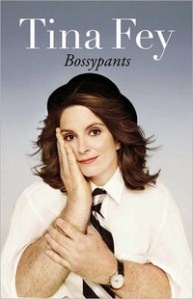 In today’s world coming across visible female role models can be quite challenging. Young women gaze at countless types of screens (and some even pick up a magazine every now and again) searching for the face they want to emulate. And what do they see? Bleached blondes with miniature animals crammed into handbags that cost more than their parent’s combined yearly salaries. Snookie with her poofed up hair, cancerous orange skin, and whose goal in life seems to be taking shots and getting into hot tubs.
Then came Tina Fey, not with a bang but with a few self-deprecating jokes and a hilarious resemblance to Sarah Palin. First she was a writer for Saturday Night Live, then she crossed stage lines to be in front of the camera for their popular “Weekend Update” sketch, and then hit it big with her show 30 Rock. Now, she has written a book about her life, or at least a few bits of it.
Bossypants is a collection of anecdotes and commentary by Fey that covers things like her scar, her dad, her early days in improv, what Photoshop means for women these days, and many other topics. It’s a quick, light read (except for the bits about how she was attacked by a stranger and slashed across the face as a child) and has quite a few chuckle-worthy moments.
As a self-described Fey Follower, I was excited to read her book. I wanted it to be funny and interesting and eye-opening. I was a little disappointed. This memoir, I should mention, was written very clearly for a 35-50 female audience. She talks, at length, about child rearing and marriage and other family related topics. As a 25-year-old woman who has yet never been married nor given birth, these topics bored me. In addition, many of her jokes used celebrity references from before my time, and therefore were completely lost on me. Obviously this isn’t due to the book being bad, just that the age gap was hard to get around at times.
Fey also wrote a chapter called “Dear Internet” in which some negative posts that have been made about Fey on the internet (I assume, she easily could have made them up for the sake of this chapter) are re-printed and Fey responds. I’m not entirely sure why this chapter made me uncomfortable, perhaps it’s because I think that Fey generally receives far more positive feedback than negative (but how could I know?) and this nit-picking chapter just felt lame. I wanted to yell, “Tina! You’re awesome and everyone knows it! Why are you wasting time trying to make funny retorts to insults you shouldn’t think twice about!” At least it wasn’t a very long chapter.
One of her last chapters, “A Mother’s Prayer for Its Daughter” was both funny, sweet, and a little surprising. A few of my favorite lines are:
May she be Beautiful but not Damaged, for it’s the Damage that draws the creepy soccer coach’s eye, not the Beauty.
and
May she play the Drums to the fiery rhythm of her Own Heart with the sinewy strength of her Own Arms, so she need Not Lie With Drummers.
and
And when she one day turns on me and calls me a Bitch in front of Hollister, Give me the strength, Lord, to yank her directly into a cab in front of her friends, For I will not have that Shit. I will not have it.
It’s too bad I read that chapter after already sending out my Mother’s Day card to my mom. I think she might have had a laugh at a photocopy of this chapter.
I enjoyed this book, and I still love Tina Fey, and I will buy her next book if she chooses to write one, but I hope the next one is less about babies and more about her other life experiences. While I well understand the perils of putting people on pedestals (say that five times fast!) it was a little disappointing reading about how boringly normal Tina Fey and her life is. I wanted to read about crazy writer antics (she did talk about the men on her show peeing in cups and keeping them around the office) and the rejections she must have received before her rise to stardom. I wanted to read about the future of 30 Rock, will she write any more movies, and what was it like working Lindsay Lohan on Mean Girls?
Oh well. Thank you Tina Fey for the chapters about Lorne Michaels, writing, and your long time friendship with Amy Poehler. Now write more about that stuff and leave child rearing talk to What to Expect When You’re Expecting and BabyGap.
-
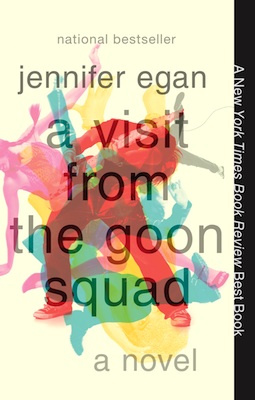
A Visit from the Goon Squad by Jennifer Egan
 Reading Jennifer Egan’s A Visit from the Goon Squad is kind of like going on a fantastic journey through time where you not only get to see what happens to the main characters, but also what happened to them in the past, what happens to their children, their assistant’s children, and any other random person (who, of course, is never really random) in the story.
A Visit from the Goon Squad was sitting on my shelf (I bought it after reading a review of it on TheMillions.com) when I saw that it recently had won the 2011 Pulitzer Prize in fiction.
I had purchased the novel because from what I read about it online, it was about the music scene in the San Francisco Bay Area. Having grown up in the (albeit early 2000) Bay Area music scene I was intrigued.
I was both disappointed and incredibly pleased. Egan’s version of the Bay Area music scene was not the same as my own memories of it (how could it be?) but it was also about so much more than music. For starters, most of the novel takes place in New York City, with interludes to San Francisco, Italy, and Africa. It also follows a menagerie of characters from the aged music tycoon Bennie to the young daughter of Bennie’s ex-assistant, Sasha. While I think it’s impossible to quickly summarize the plot of a novel with so many characters, I’ll attempt to do my best here:
A Visit from the Goon Squad is about people growing up.
Egan’s novel follows the lives of many characters, all intersecting at some point, but each character is only given a short amount of time in the spotlight. Bennie and Sasha are the two characters that we see the most of (Bennie and Sasha as teenagers, young adults, and adults) while many of the people they know and will know swirl around them.
After reading this novel you want to go back and read it all over again, making mental notes of each mention of each character. I often found myself recognizing names in later chapters that I was certain I had read about (usually very briefly) in earlier chapters.
At times it proves a little difficult keeping track of all the different characters, but generally Egan does a good job of keeping us in the loop. She bounces around in time as well as characters point of views, (here Bennie is a teenager in a crappy punk band, here Bennie is happily married and at the top of the music business, here Sasha is Bennie’s assistant, here Sasha is a teenager in Italy, here Bennie is tired of the music biz and divorced, etc) It’s these time changes that keep the reader so involved with the story. Each character’s lives (usually dark and full of regrets) become extremely gripping when given such extensive back story.
The only drawbacks to this novel were its last two chapters, where Egan goes a little experimental with format and jumps ahead a little too far into the future. Chapter 14, “Great Rock and Roll Pauses” is written entirely in Powerpoint slides from the point of view of Sasha’s young daughter, Alison. While I could still easily follow the story through the slides, it felt very contrived and didn’t really add anything for me. The last chapter, “Pure Language” takes place in the future, but the reader knows it can’t be too far in the future because the characters we have been following are still alive and well. Egan takes our current obsession with texting and amplifies it in this dystopia science-fiction chapter. While she maintains her way of stringing characters together, this lurch into science fiction is jolting and unbelievable. I found it hard to buy that so much had changed in such a short amount of time, although with our society’s current technological developments I suppose anything is possible. In this last chapter, Egan paints a world where everyone almost solely communicates through texting using “handsets” and where the music industry has been given a second wind through the buying powers of young children, called “pointers”. Because it is the last chapter, and rather brief, Egan doesn’t develop this futuristic world as much as it would have taken for me to buy into it.
It would be impossible for me to summarize this entire novel, or even to speak to half of its devices and motifs. It’s very complex, often depressing, but always engaging. I highly recommend it to anyone who has made a mistake or two in their lives.
-
Ann Beattie: Now and Then
 In college I read a short story by Ann Beattie in one of those short fiction compilation books assigned in fiction classes. It was called “Janus” and I didn’t care for it.
I had no contact with Beattie’s writing until recently, when I read an interview with her in the spring issue of The Paris Review. She mentioned that “Janus” was not one of her favorite stories, which made me want to give her another chance. The interviewer and Beattie talked mostly about her older stories from the 1970’s, so I took a little walk to my local used book store and picked up a copy of Distortions, a book of her short stories published in that time.
They were…different, to say the least. Beattie uses the same recurring names in most of her stories from this time, which caused me some confusion at first thinking that these stories may be connected (they weren’t, after further reading). She used the names David and Sam the most, and in fact this book was dedicated to a David. I like to think that maybe Beattie, like myself, hates naming her characters and that’s why she reuses the same names as often as possible.
Her stories, aside from featuring similarly named characters, are all very slice-of-life pieces about normal people behaving rather oddly. Many of her characters speak very bluntly to each other of their desires and random thoughts. In “The Lifeguard” a wife tells her husband she is attracted to a lifeguard, though she doesn’t do anything about it.
Strange things like alien visitations occur (“It’s Just Another Day in Big Bear City, California”), a young man shacks up with an overweight housekeeper just so he has someone to go to the Grand Canyon with (“Hale Hardy and the Amazing Animal Woman”), and a woman has an affair while her husband keeps busy looking for fancy cooking ingredients (“The Parking Lot”). Mostly, lots of people get bored with their lives and a little crazy.
One of my favorite stories was “Wanda”, a story about a young girl whose father runs off and whose mother runs after him, to bring him back, leaving the girl with her Aunt Wanda. Her Aunt Wanda and the upstairs neighbor Mrs. Wong lecture her about men while both are very much man-less. Then her father returns and in a drunken haze kidnaps her for a “fun” weekend of partying at his girlfriend’s house.
Beattie’s stories all have similar elements and themes, showing an array of average people in strange circumstances. While some of the stories are sad, others she laces through with a subtle humor. One of my favorite passages in this collection of stories was in a story called “Vermont”, and it shows the intimate ways a couple interacts with each other:
Tonight, as I do most nights, I sleep with long johns under my nightgown. I roll over on top of Noel for more warmth and lie there, as he has said, like a dead man, like a man in the Wild West, gunned down in the dirt. Noel jokes about this. “Pow, pow,” he whispers sleepily as I lower myself on him. “Poor critter’s deader ‘n a doornail.” I lie there warming myself. What does he want with me?
“What do you want for your birthday?” I ask.
He recites a list of things he wants. He whispers: a bookcase, an aquarium, a blender to make milkshakes in.
“That sounds like what a ten-year-old would want,” I say.
He is quiet too long; I have hurt his feelings.
“Not the bookcase,” he says finally.
I love this passage because of how real it feels to me. It’s just two normal people in bed together having an unimportant conversation as they try to fall asleep that any couple could have. Beattie has such a great way with details, the way she lies on top of him for warmth and wears something as unflattering as long johns underneath her nightgown. And their short exchange struck me as hilarious, how the man decides against the bookcase of all things when she points out his wishes are childish.
I think one of the best things about Beattie’s writing is the details. She has an amazing way of writing in so many specific details that the people and places she writes about seem like they have to be real. It’s also amazing that I can read her stories now, in 2o11, that were written in the 1970s, and most of the time it felt like they could have been written recently.
I’ll admit that I’m usually one of those people who skips past the interviews in literary journals, but this Paris Review interview really caught my attention and held it. I suggest reading the interview with Beattie and if you aren’t already familiar with her work, checking out any of her short story collections or novels. She has a new compilation out now of the stories she had published in The New Yorker aptly called The New Yorker Stories.
-
Gambler’s Quartet by Brad Summerhill
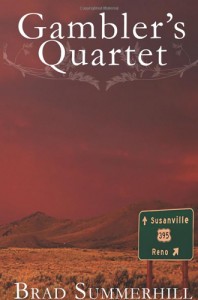 Gambler’s Quartet follows the tragic story of an estranged mother and son trying to survive their own demons and defects in Reno, NV. Johnny Drake is struggling to come to terms with his father’s recent death after months of taking care of him. He is also struggling with his mixed feelings towards his gambler mother, Jenna, whose addiction and selfishness has caused him nothing but pain. Meanwhile, Jenna chases the god of luck in craps, sports bets, and a shady business venture in a new strip club/prostitution ring.
This short, dark novel jumps from p.o.v. between Jenna and Johnny, which allows the reader insight to each of their (often) misguided motives. The ability to see into both character’s minds helps to flesh them out; Jenna is more than the troubled gambler, she also has dreams and a dark history. Johnny is not just the grieving son with a resentment towards his mother, but is also still a child wishing for his mother’s love and attention.
While these inside views help the characters round out a little, it’s hard to feel much empathy for either of them. At first Johnny seems the good son, the one with his head on straight, but that quickly unravels. Why that unravels is unclear and never really shown, although one might guess it’s due to his father’s death, lack of a decent role model, and poor choice of friends (mostly his friend Bone, who introduces Johnny to cocaine). My trouble with Johnny’s fall from grace is that it happens too quickly and too drastically; the Johnny of chapter two is almost an entirely different character from the Johnny of chapter one.
That said, Gambler’s Quartet is an interesting novel that gives an insight into the dark side of Reno. The gambling, the loan sharks, the desperation to win, are all described in a straight forward and clear way. Summerhill doesn’t go overboard with it with gloomy language, but paints a picture that is easy to see, especially if you have any familiarity with Reno. It’s also the story of a dysfunctional, yet unique, mother-son relationship. And while it’s difficult to have much empathy for characters so determined to destroy themselves, the bite of their losses and destroyed lives is still palpable.
Gambler’s Quartet is a strong and captivating first novel from Summerhill. I am interested to see what he comes out with next.
-
Ghostopolis by Doug TenNapel
 I don’t typically read young adult stuff, but I came across this YA graphic novel on Amazon and thought it looked interesting.
Ghostopolis is the story of Garth, a young boy with an incurable disease who is mistakenly sent to the after world a little too soon. In order to get home he teams up with the ghost of his grandfather, a disenchanted ghost hunter named Frank and his ex-fiance ghost girlfriend Claire Voyant, and a skeleton horse to beat the evil ruler of Ghostopolis, Vaughner.
It’s very similar to The Wizard of OZ story, complete with a mysterious man behind the curtain (“Joe”). Not a lot of unique plot twists but I enjoyed the story, there are some cute jokes and the illustration is beautiful. I like that it is a little dark without being depressing and doesn’t use any questionable language (unless you are opposed to the occasional poop joke). I suggest buying it for that young reader in your life (but reading it first yourself before parting with it!)
-
The Imperfectionists by Tom Rachman
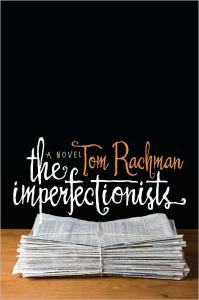 Tom Rachman‘s The Imperfectionists follows the personal lives of a staff of an English language newspaper based in Rome, Italy. Each chapter shows a glimpse into each character’s lives and could easily stand on their own as short stories. At the end of each chapter is a short interlude in which we see the beginnings of the newspaper these characters work for spanning from 1953-2007. The main chapters take place in 2007.
We get to see a range of characters from an aging Paris correspondent to a newbie trying his hand at journalism for the first time to an eccentric older lady who has been reading every issue of the paper front-to-back but who hasn’t gotten past 1994 yet. Each brief glimpse into these character’s lives is both funny and heart-wrenching. Each story is about a moment in which these characters realize something important, either about themselves or about someone in their life. These realizations change the characters, sometimes in a subtle way and sometimes in a major way.
Rachman does a phenomenal job of making his characters real in a short amount of space. He also has an interesting way of writing; he makes quick jumps in time and place in order to get his characters where he wants them to be as quickly as possible. This tactic is at first jolting, but over time one adjusts to it.
While the novel is largely about the characters involved with the newspaper, it is also largely about the newspaper itself. We are given a brief history of it through the interlude chapters and its “current” state in 2007. Rachman has one of his characters give a speech about the future of the newspaper industry, sentiments that have been widely expressed in real life about the struggling industry:
“Obviously, we are living in an era when technology is moving at an unheralded pace. I can’t tell you if in fifty years we’ll be publishing in the same format. Actually, I can probably tell you we won’t be publishing in the same way, that we’ll be innovating then, just as we are now. But I assure you of this: news will survive, and quality coverage will always earn a premium. Whatever you want to call it-news, text, content-someone has to report it, someone has to write it, someone has to edit it.”
I greatly enjoyed this novel, it was one of the best books I have read in a long time and I eagerly await more from this talented writer.
-
“Gold Mine” by Claire Vaye Watkins
After reading The Paris Review‘s disappointing Winter 2010 issue, I must say “Gold Mine” by Claire Vaye Watkins was its sole saving grace.
It’s a gripping story with multiple facets that really brings the reader in hard and fast. It tells the story of three characters: Darla, a popular prostitute at the Cherry Patch Ranch, Manny, the manager of said ranch, and Michele, a foreign visitor who mistakenly visits the ranch. All three characters are multi-faceted and bulk at the stereotypes characters such as these would typically be written as. Darla isn’t necessarily the prostitute with a heart of gold, though neither is she so hardened as to have no heart at all. Manny isn’t brutal and cruel with his girls, and Michele, while innocent, has his own drama going on.
The story takes place in Nevada, where only such a story could take place, just outside of Las Vegas. Watkins really paints the landscape well and portrays the whore house as a business, not a hell hole. I found it an interesting book end (as it is the last story in the review, followed only by a short poem) to Alexandra Kleeman’s “Fairy Tale” (read my review of that story here). Both stories were written by relatively unknown young female writers, but it was Kleeman’s (inferior) story that got so much attention.
The Nevada Review did an interview with Watkins which discusses her background as a Nevadan and her experience at Ohio State University’s MFA program. I for one am very excited about her upcoming collection of stories. She’s definitely an author to keep an eye on.
-
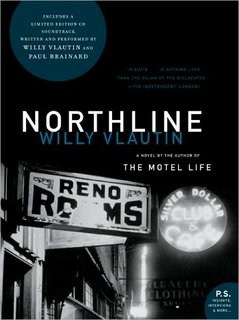
Northline by Willy Vlautin
 Vlautin’s The Motel Life and Lean on Pete are both heart-wincing novels about downtrodden young people who make mistakes, struggle, and somehow come out alright in the end. Northline is no different.
Northline is the story about a 23-year-old waitress named Allison who dropped out of high school and is dating a Neo-Nazi jerk in Las Vegas. When she finds herself to be pregnant, she forces herself to leave Vegas and her abusive boyfriend to go to Reno, where she gives the baby up for adoption. There she tries to move on with her life and to rise above her dark past with a little help from an overweight divorced woman and a hallucination of Paul Newman.
What Allison leaves behind in Las Vegas is a history of drinking, getting raped, being locked in her boyfriend’s trunk, and having a swastika tattooed on her while she was half-passed out. Her younger sister seems to be following in her footsteps while her mom watches television.
Vlautin has a very simple writing style, he tells the story in a “this is how it is” fashion, he doesn’t dress it up with flowery language or gratuitous details. It’s this writing style that makes his characters seem even more real, and the gritty lives they lead all the more believable. He sets his scenes up the same way, using sparse details but just enough to develop a setting easy to imagine. Reno is filled with bars and casinos while the air is filled with lowlifes and smoke. There’s no glamour in running away from home the way Vlautin describes it, and no beauty in Allison’s weakness. Even so, it’s easy to empathize with Allison and her self-loathing and self-destructive nature.
What I also love about this novel is Vlautin’s use of dialogue. All of the characters speak to each other in a very blunt and honest way, even when they are lying to each other. Dark secrets will be easily and succinctly revealed, and reactions to those secrets will be a shrug of the shoulders. For example, Dan, one of Allison’s regulars at the restaurant she works at, tells her that he is afraid of people his own age because a group of guys his age once beat him almost to death for no reason. Allison barely bats an eye at this revelation and merely tells him that she understands.
Northline is a great read, chopped up into short chapters for easy reading. It also includes an interview with the author and a short explanation on how this story came to be.
-
Cinderella: From Fabletown with Love by Chris Roberson and Shawn McManus
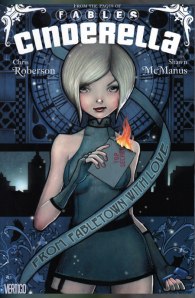 I picked up this graphic novel while at the Emerald City Comic Con last weekend. It’s a cute story about Cinderella, except that she’s no longer the dainty princess. She’s actually a bad ass spy now, and she’s kicking butt and taking names on behalf of “Fables” (fairytale characters) everywhere. The more popular the story, the more powerful the Fable, so Cinderella certainly packs some heat.
In this story, Cinderella, or Cindy to her friends, is assigned to find out who is smuggling magic items into the normal world. She travels to Bagdad and meets Aladdin, where they team up to stop whoever is behind the smuggling. Along the way we meet allies (Puss in Boots, Dickory the Mouse, and Beast, from Beauty and the Beast) and villans (mostly nasty flesh-eating monsters).
It’s a fun story, with a few chuckle-worthy jokes centered around fairytale word play. The only real disappointing part was the use of some bad language, it would be a great gift for a junior high kid except that a few bits of profanity are sprinkled throughout the book. It’s unfortunate the writer chose to do this (probably in an attempt to make it for adults), because the profanity really doesn’t add anything to the story and removes it from a demographic which could really use a story where the princess chooses to be a spy instead of singing and sewing.

 Bent Shelf Book Reviews